

A Q&A with Mark Lewis, General Manager, Private Networks Queensland, at BAI Communications, on why connectivity is a frontline safety issue for mining operations, and what happens when it fails. Lewis has spent years on the ground in this exact space, having led operations for Titan ICT (the QLD-based mining and resources network specialist now part of BAI) before its integration into BAI Communications. This piece originally appeared in the November of The Coal Face.
Mark, connectivity used to be treated as a productivity issue in mining, something for the IT team to worry about. Why is it now a safety conversation?
“Because the risk has changed. A decade ago, if your network dropped out, you lost some efficiency: a haul truck dispatch delay, fall back to manual workarounds. Today, a lot of assets are running collision avoidance, autonomous haul trucks, drilling equipment and underground sensors and environmental monitoring systems, all relying on that same network being always on. If it fails, production is interrupted, but more importantly, people are put at risk. It’s the same shift happening across other high-risk industries, like rail networks and energy. Reliable connectivity has become a frontline safety issue, not just an IT issue.”
What does “resilience” actually mean here? Is it just about having backups?
“Backups are a small piece in the puzzle, but they’re not the whole picture. True resilience may mean having more than one path for the signal to travel (redundancy), so a single fibre cut or a piece of faulty equipment doesn’t take the whole site offline. It means the backup kicks in automatically, not something a technician has to drive out and switch on manually. And it means keeping an eye on the network, with proactive monitoring we can see a link starting to degrade before it actually drops out. The clients that get this right treat their networks with respect, the same way they’d treat any other safety-critical equipment: regular checks, scheduled maintenance, end-of-life software and hardware planning, not something you install once and forget about.”
Underground operations present a different set of challenges. What changes below the surface?
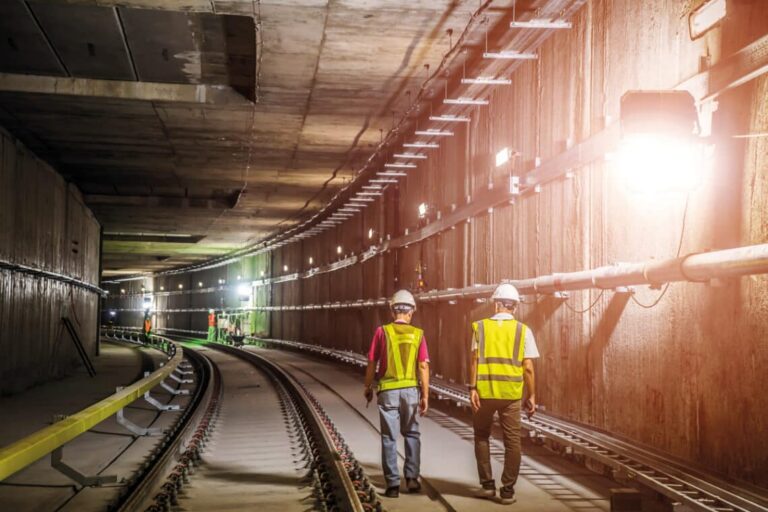
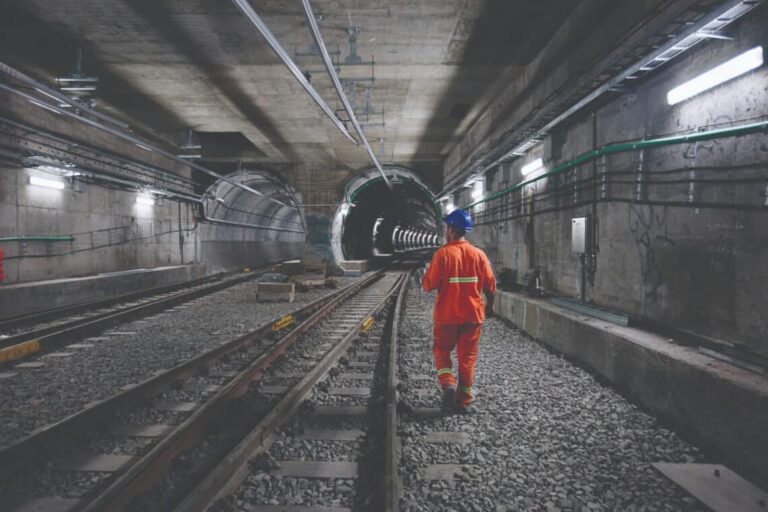
“Everything gets harder. Ordinary wireless systems do not radiate well through rock and confined tunnels as they do above ground, so underground sites need connectivity that’s built specifically for that environment. Things like leaky feeder cable, which runs the length of a tunnel and radiates signal along it, or dedicated antenna systems and networks designed to ensure coverage where it is required. Get that right, and you can track where people and vehicles are in real time, get emergency alerts through instantly, run remote-controlled or autonomous equipment safely in these more dangerous environments, and pick up early warning signs of equipment degradation. Get it wrong, and safety systems can fail the moment you lose signal and network connection.”
Has this actually been proven, or is it still mostly theory?
“It’s proven. Our sister company Boldyn Networks, working with Nokia, built a private 5G network at the Callio Pyhäjärvi mine in Finland, a copper mine 1.5km deep, and one that’s been operating for a while now. It’s now used as a testing ground for exactly this kind of technology – pinpointing where people and vehicles are in real time, running equipment remotely from the surface. It’s concrete evidence that these networks can deliver where older technology simply isn’t up to the job. That’s the same principle we apply here in Australia.”
BAI’s worked in public safety for a long time, and now in rail. Does that experience actually carry over to mining?
“Absolutely, the BAI team builds and maintains the NSW Telco Authority’s Public Safety Network, one of the biggest emergency services radio networks in the world, and is delivering the 5G network for the new driverless Sydney Metro West line. These are industries where a connection dropping out isn’t just annoying, it’s dangerous, exactly the same situation in a mining site. We bring the same standards to a mine site that we’d bring to building a network for emergency services or an underground metro train line. It’s a mindset as much as a technology stack. You plan for the worst day, not the average one.”
What’s the most common gap you see when considering a network?
“Single points of failure that nobody’s mapped. It’s a pattern that shows up regularly. Networks grow organically over years, new equipment gets bolted on, new applications added, and nobody’s stepped back to ask, “if this one switch fails, what actually goes down?” We’ll often find that a safety-critical system and a lower-priority one are sharing the same unprotected link without anyone realising it. The fix isn’t always expensive, sometimes it’s a configuration change, but you have to go looking for it, because it won’t show up until the day it fails.”
If an operator isn’t sure their network can handle the safety systems they’re planning, what should they do first?
“Get an honest assessment of what you actually have before you add anything new. Understand your current capacity, your points of failure, and how the network behaves under fault or stressed conditions, not just under normal load. Many people discover what their network can’t do right when they need it to do more, because a new safety or automation system goes live and exposes gaps that were always there. Doing that assessment early, before you’re relying on the network for something safety-critical, is the difference between a planned upgrade and an after the event upgrade following a serious incident. There have been high-profile examples of this in the news of late.”
Any final thoughts for the industry?
“Just that network resilience shouldn’t be treated as a technical afterthought bolted on at the end of a project. If a system is safety-critical, the network underneath it is safety-critical too, and it deserves the same investment, the same testing, the same ongoing attention, as any other safety system on site.”
For more on BAI’s mining connectivity solutions visit: https://bai360.baicommunications.com/miningandresources