

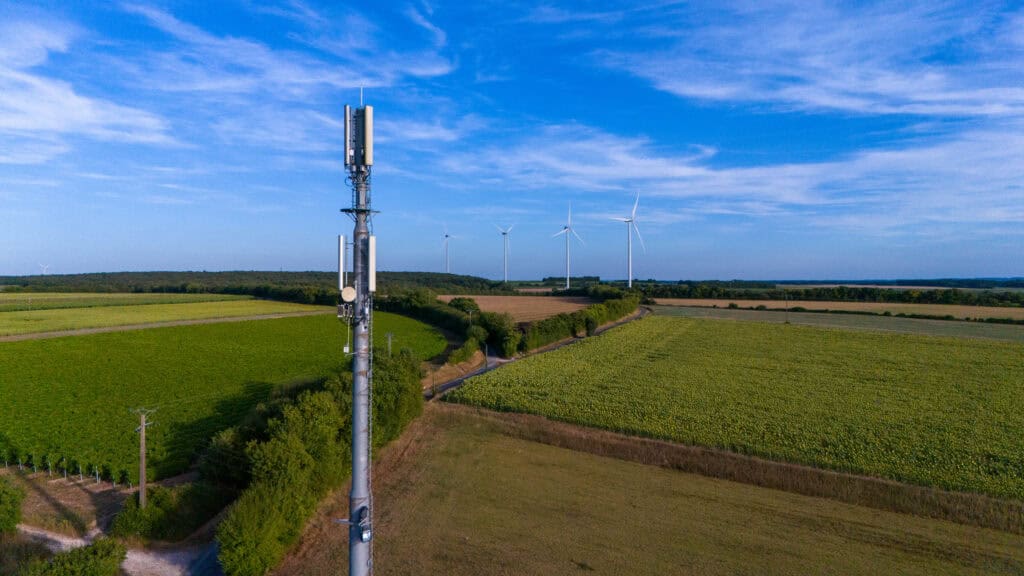

RF studies for wind farm impacts on communication networks

At a glance

Australia’s wind energy boom is transforming the country’s energy landscape, but rapid turbine deployment brings a significant and often overlooked challenge. Wind turbines can interfere with radio communication networks through physical obstruction, signal diffraction, scattering, near-field effects, and electromagnetic emissions. These effects can disrupt everything from private microwave backhaul links and 4G/5G networks to emergency services radio and meteorological radar.

With Australia’s wind energy market forecast to grow from 33.4 TWh in 2023 to 141.4 TWh by 2032, a compound annual growth rate of 15.7%, understanding and mitigating these impacts before construction begins has never been more important.

In our whitepaper ‘RF studies for wind farm impacts on communication networks’, we explore the communication risks created by wind farm development, the networks most at risk, and how a structured RF impact assessment methodology helps developers, network operators, and regulators manage interference before it becomes a problem.


Key takeaways

Australia's wind energy expansion is accelerating fast

Wind energy generation is forecast to grow more than fourfold by 2032, bringing new turbine developments into proximity with critical communication networks across regional and remote Australia.

The range of potentially affected networks is broader than most expect

Wind farms can disrupt a wide range of networks, from microwave backhaul and 4G/5G to emergency services radio and satellite communications, requiring a comprehensive RF impact study.

Early assessment is essential

Identifying and resolving potential communication impacts during planning avoids costly remediation after construction and gives developers clear mitigation strategies before ground is broken.
“Wind turbines don’t just generate power, they can disrupt the communications infrastructure communities and industries depend on. Understanding that risk before construction begins is not optional.”

Chris Upstone

Director of Public and Private Networks, BAI Communications

More Whitepapers

People at a concert use smartphones to capture images of lights and confetti.

Connected stadium: Technology enablers for stadiums of the future

Electricity Maintenance Engineer working on the field at Power station at dusk.

The power of private networks

Step inside our new interactive experience and see how our connectivity solutions are transforming industries. From real-world use cases to future-ready solutions – unlocking tomorrow’s possibilities is just a click away.