
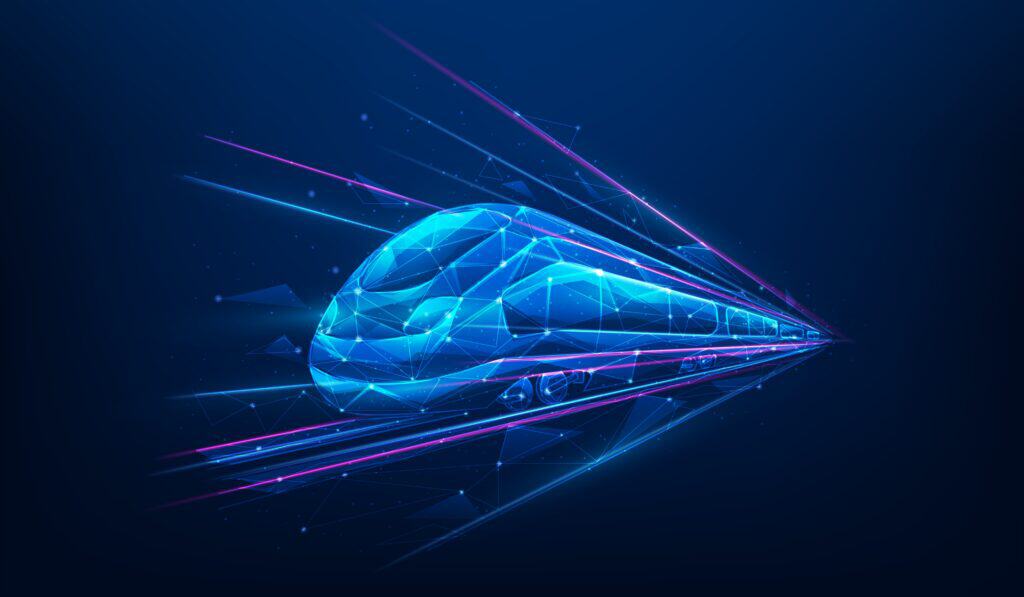

Why ‘future ready’ rail communications means designing for two eras at once.
Rail operators are living through an unusual kind of transition. On one side of the platform sits decades old signalling and voice infrastructure, some of it approaching or past its intended design life. On the other sits a fast moving set of new standards, ETCS, CBTC, and increasingly FRMCS, all promising more capacity, tighter signalling integration, autonomous rail environments, and greater resilience. Most networks are being asked to run both at once, for years, without a single day of disruption to passengers or freight.
That is the real engineering challenge in rail communications right now. It is not simply a question of installing new technology. It is a question of sequencing, of keeping a legacy system alive and trustworthy while a next generation network is designed, tested, and brought online around it, often on the same corridor, in the same tunnels, sometimes overnight between the last train and the first.
A few things tend to separate the operators who navigate this well from those who struggle.
Legacy support is an engineering discipline, not a stopgap
The first is treating legacy support as an engineering discipline, not a stopgap. When original equipment manufacturers withdraw support for ageing systems, as they inevitably do, the answer is not always a wholesale replacement on an accelerated timeline. Local calibration, component level repair, and careful obsolescence management can keep critical systems reliable for years longer than their manufacturers intended, buying operators the time to plan a proper transition rather than being forced into a rushed one.
Resilience must be designed in, not bolted on
The second is designing resilience in from the outset, rather than retrofitting it. Rail communications increasingly sit alongside emergency services networks, public mobile coverage, and the kind of critical infrastructure protections that regulators are tightening globally, including cyber security demands that comply with Australia’s SOCI Act. Networks built to support availability targets as demanding as 99.999 percent and operational resilience considered at the design stage, not bolted on once the network is live.
There’s no single right ownership model
The third is recognising that rail transformation rarely fits a single ownership model. Some operators want to build, own, and commercialise their own infrastructure. Others would rather a partner structure with capex, opex, and asset transfer arrangements around the project’s scale and lifetime. Neither approach is wrong, but knowing which one suits a given network, and being able to deliver either, matters more than most capability statements let on.
None of this is theoretical. Metro and mainline networks from London to Hong Kong to Sydney are working through versions of this same problem, each shaped by its own tunnels, stations, timetables, and regulatory environment, but united by the same underlying question: how do you modernise safely while the network keeps running.
The lessons travel, even when the tunnels don’t
It is also why global experience counts for more in rail than in many other infrastructure sectors. A dense urban tunnel in one city and a high frequency mainline line in another rarely look alike on the surface, but the lessons learned solving for coverage, resilience, and legacy coexistence in one environment travel remarkably well to the next. Operators moving through their own modernisation journey are increasingly looking for delivery partners who have already worked through that sequencing problem elsewhere, rather than encountering it for the first time on a live network.
As FRMCS adoption gathers pace globally and more operators reach the point where legacy support is no longer a given, this sequencing challenge is only going to become more common, not less. The networks that get ahead of it, rather than reacting to it, will be the ones still running smoothly a decade from now.
Want to talk through where your network sits in this transition? Learn more about our work in rail on BAI360 and get in touch with the BAI team.